

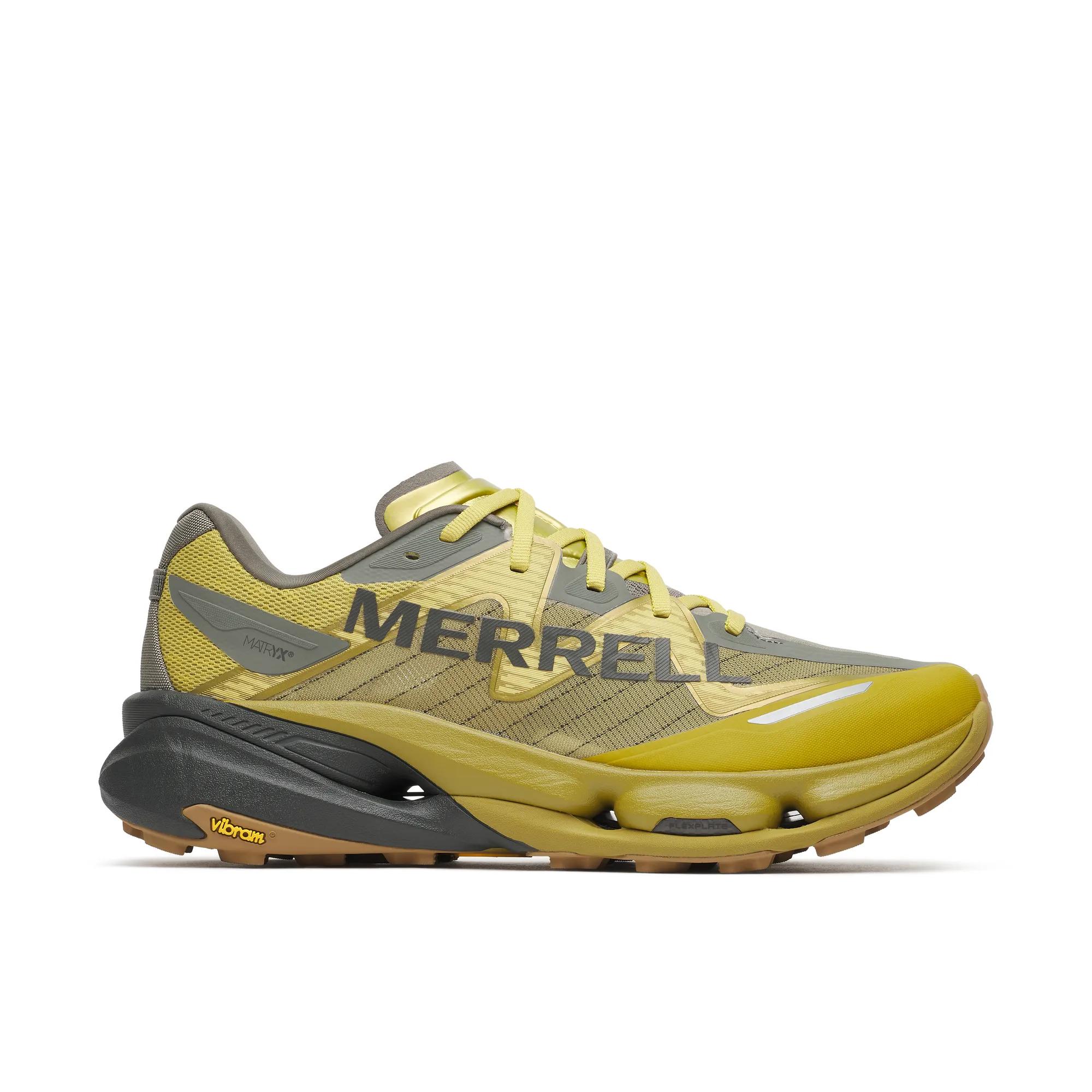
The Merrell MTL SpeedArc Peak is a carbon-plated trail racer for runners who want speed on technical ground and don’t mind paying for it. I spent several weeks testing it and it’s one of the more interesting trail shoes to arrive this year.
It’s not cheap. At £260, it costs well above most trail shoes on the market. That premium is the first thing serious buyers need to weigh up.
For the price, you get a shoe with genuine racing intent. A forked carbon plate, dual-layer PEBA and FloatPro midsole, Matryx upper reinforced with Kevlar, and Vibram Megagrip Elite outsole all serve one goal: helping you move fast over rough terrain.
Who Is the SpeedArc Peak For?
This shoe suits trail runners chasing race times on moderately technical terrain, especially heel strikers who want strong underfoot protection without excess weight. It rewards confident, quick-footed running rather than cautious steps.
The Verdict After Testing
The SpeedArc Peak felt most at home on flowing singletrack and gravel. The carbon plate gives you a sense of drive at push-off. I noticed it most on rolling terrain, where I could find a rhythm and let the shoe do some of the work.


Heel strikers will probably get on with this shoe faster than forefoot runners. The stack is tall at the back, and the ride favours landing on the heel and rolling through.
I’d reach for this shoe on race day or for a hard training run, not for every trail outing. It feels purposeful rather than relaxed, which is what you’d expect from a £260 racer.
Who Should Look Elsewhere?
Forefoot and midfoot strikers may find the front of the shoe less forgiving than the heel, as the cushioning is noticeably firmer there. Runners who prefer a wide toe box should look elsewhere too: the fit through the forefoot is narrow and tapered.

How Does It Feel on the Run?
The SpeedArc Peak feels protective and purposeful rather than plush. Its ride is firmer underfoot than the tall stack might suggest. It takes a run or two to adjust to the carbon plate, but once you do, it’s a shoe you can push in.
Does the Carbon Plate Make a Difference?
Yes. It’s the most noticeable thing about the shoe. The forked carbon plate splits towards the front rather than running as one solid piece. That lets the forefoot move somewhat independently across uneven ground, so the ride doesn’t feel too stiff on broken trail.
On smoother sections, the plate adds a spring to each stride that becomes addictive after a few miles. It doesn’t feel like it’s launching you forward. It just seems to support a slightly quicker turnover than I’d naturally settle into in an unplated shoe.
Is It Better for Short Races or Long Days?
I’d say this shoe is best suited to short and mid-distance races, roughly 10K to marathon-distance trail events. The firmer forefoot cushioning means the protection you feel in the first few miles won’t carry through evenly to the end of longer days.


I wore it on runs of up to two hours and felt comfortable throughout, with no hot spots or complaints from my feet. I’d want to test it further before recommending it for longer runs. Where feet swell, and every pressure point gets amplified.

How Well Does It Grip?
Grip is where this shoe does its best work. The Vibram Megagrip Elite outsole, with its butterfly- and chevron-shaped lugs, gripped everything I tried it on, from wet roots to loose gravel.
Traction on Loose and Wet Ground
On damp leaf litter in autumn conditions, the SpeedArc Peak held its line without the small slips and corrections I’m used to with less capable outsoles. On loose gravel, the lugs bit in cleanly instead of skating across the surface.
How Does It Fit?
The SpeedArc Peak fits true to size but is narrow through the toe box. Its snug, performance-oriented last suits narrower feet best. Runners with wider feet, or those who like plenty of room to splay their toes, should try a pair on before committing.
My usual size worked well, with secure lockdown through the midfoot from the lacing and a snug collar around the ankle. Heel hold is good.
The tapered toe box took a run or two to get used to. Runners with narrow feet will likely find it secure and glove-like.

Breathability and Upper Protection
The Matryx upper, with Kevlar threading, breathes well and dries quickly after wet trail sections. Even on warmer days, my feet never felt overheated. That matters on long climbs, where ventilation can make a real difference.
Protection is strong too. The reinforced toe area shrugged off a couple of accidental strikes without discomfort, and the upper showed no signs of wear after regular use.


Is It Worth the Price?
The SpeedArc Peak earns its price for serious trail racers who’ll regularly use its carbon plate and grip, but it’s a tough sell for casual trail runners. At 371 grams per shoe in a UK size 12, it’s a reasonable weight for a racing shoe, though not one of the lightest options out there.
Weight, Durability and Everyday Use
The weight feels well judged for what the shoe offers though. It never felt bulky on foot despite the tall stack and multiple midsole layers. The durable Matryx upper and Vibram outsole also suggest it’ll hold up to regular hard use, rather than wearing out after a handful of races.
I wouldn’t reach for this shoe on easy recovery runs. It’s built with intent, and using it for every run would be like taking a race bike on your commute.
For runners who already like Merrell’s fit and want the brand’s most technically advanced shoe, the price is easier to accept. For everyone else, it’s a significant outlay for a fairly specialised piece of kit.
A Strong Trail Racer for the Right Runner
The Merrell MTL SpeedArc Peak delivers where it counts: outstanding grip, solid heel protection, and a carbon plate that adds drive on rolling and moderately technical trails. But its narrow fit and firmer cushioning up front won’t work for everyone, especially forefoot strikers and runners with wider feet.
For heel-striking trail racers tackling mid-distance events on varied terrain, this shoe earns a spot in the kit bag, despite its steep price.


