

If you’ve ever torn open your gel on a long run and felt your stomach turn at the thought of another one, you’ll understand why FTP Endurance Fuel does things differently. The Aberdeen-based brand makes chewable energy pastilles and a carbohydrate drink mix, sold loose by the kilo rather than in individual sachets.
I tried the tart cherry versions of both the pastilles and the Power Fluids drink mix, which sit at the heart of the brand’s Power Endurance System bundle. I’ve been testing them out on runs ranging between 10k and 20k to see how they perform across different distances.
This review covers what that system includes, how the tart cherry products actually taste and perform, and whether the subscription pricing stacks up against buying gels or chews elsewhere.
What Do You Get in the Power Endurance System?
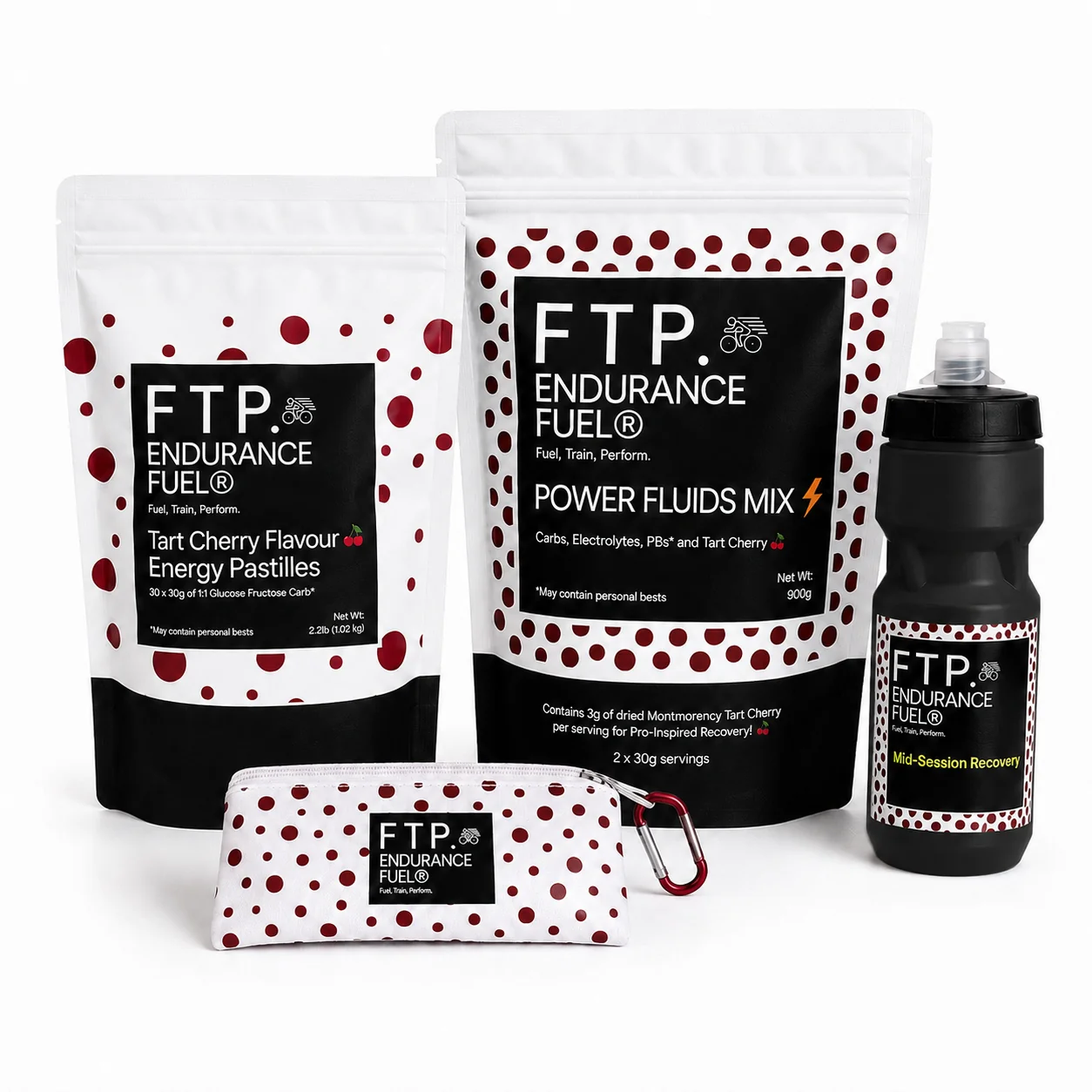
The setup is simple. You get a 1kg bag of Energy Pastilles in your chosen flavour, with roughly 60 pastilles or 30 servings, plus a 900g bag of Power Fluids drink mix, with 30 servings. Together, FTP reckon that’s around 1,600g of carbohydrate, enough for more than 20 hours of properly fuelled training.
What Comes in the Subscription Welcome Kit?
Your first box includes a few extras alongside the fuel. There’s a reusable Adventure Pouch for carrying pastilles without wrappers, a 710ml FTP sports bottle, and a taster of the pastille flavour you didn’t choose. FTP values the welcome kit and fuel at up to £91, compared with the £49.99 introductory subscription price.


How Do the Tart Cherry Energy Pastilles Perform?
The tart cherry pastilles are easy to eat, provide a decent carbohydrate hit, and don’t sit heavily in the stomach. That’s what you want from fuel on a long run. I found them genuinely pleasant, rather than something I had to force down.
Taste, Texture and Ease of Chewing on the Move
The texture is soft, a bit like Turkish delight. The tart cherry taste is mild but pleasant, so it’s easy to eat them again and again without flavour fatigue.
However, there are a couple of practical drawbacks. Chewing becomes trickier at faster paces. During tempo efforts or harder intervals when breathing heavily, chewing and swallowing solid fuel is far harder and more disruptive to your breathing rhythm than downing a gel. Also fiddling with the pouch zip and fishing one out mid-stride takes extra coordination.
Carbohydrate Content and the Glucose-Fructose Blend
Each pastille weighs 17g and contains 15g of carbohydrate, so two give you 30g, roughly the same as an average gel. The sugar comes from a 50:50 glucose and fructose blend, rather than the glucose-heavy syrup used in many gels and chews. That matters when you’re pushing your intake above 60g an hour: a mix of glucose and fructose tends to absorb better and cause fewer stomach problems than glucose alone. I had no stomach trouble while testing these.

What Is the Tart Cherry Power Fluids Mix Like?
The Power Fluids tart cherry mix delivers a good carbohydrate and electrolyte hit, with standout flavour. It mixes cleanly and provides a reliable energy source for hard efforts.
Flavour, Sweetness and Mixing
The Power Fluids mix tasted really good. I’ve been mixing two 30g scoops into 500ml of water, and it tastes fantastic.
The flavour stayed crisp and refreshing, not overly sweet. It dissolved completely with a quick shake, with no clumps or gritty sediment.


Carbohydrates, Sodium and Other Electrolytes per Scoop
One 30g scoop gives you 27g of carbohydrate and 300mg of sodium, plus smaller amounts of potassium, calcium and magnesium. The carbohydrate comes from dextrose and cane sugar, giving you both glucose and fructose rather than a single sugar source. The sodium helps replace some of the electrolytes lost through sweat. It’s a sensible default, so most people won’t need to adjust it much for regular training sessions.
A Caffeine-Free Option with Montmorency Tart Cherry
The tart cherry version contains 3g of dried Montmorency tart cherry per scoop and no caffeine. That makes it a good choice if caffeine upsets your stomach or you’re fuelling in the evening. FTP also sells a Core Citrus version with 50mg of caffeine per scoop for sessions when you want a bit of a lift. It gives you a real choice, depending on the session and time of day.

How Do the Pastilles and Drink Mix Work Together?
Used together, the pastilles and Power Fluids make it simple to hit endurance carbohydrate targets. Two pastilles plus a single scoop bottle of Power Fluids gives you 57g of carbohydrate, at the edge of the 60 to 90g an hour recommended for long or hard training.
Adjusting Fuel and Fluid Intake to Your Session
You don’t need 60g an hour for every run. For an easy hour-long session, one pastille was plenty for me. The bulk-bag format means you aren’t locked into eating a full gel’s worth just because that’s what the packet contains. Longer or harder sessions are where using both products together comes into its own.
Stomach Comfort and Carrying Fuel Without Individual Wrappers
Neither product upset my stomach, even on longer runs when I’d normally expect some discomfort. Carrying loose pastilles in the Adventure Pouch means no wrappers rustling in your pocket or sticky residue on your hands.
How It Compares on Cost
At £59.99 for a reload box delivering around 60 servings of 27–30g carbohydrate, FTP works out at approximately £1.05 per 30g of carbohydrate. That makes it competitive against mainstream gels and chews.
Science in Sport (SiS) GO Isotonic Gels typically retail between £1.50 and £1.80 each. However, each gel delivers only 22g of carbohydrate, making them significantly more expensive gram for gram than FTP.
Torq Energy Gels deliver a comparable 30g carbohydrate hit using a dual-source glucose and fructose blend. They usually cost between £1.50 and £2.10 each, meaning FTP is substantially cheaper for equivalent fuelling.


CLIF Bloks Energy Chews cost around £3.00 to £3.70 for a six-chew packet containing 48g of carbohydrate. That translates to roughly £1.50 to £1.85 for a 24g serving, making FTP’s bulk pastilles far better value than buying packaged chews.
A Practical Alternative for Athletes
FTP Endurance Fuel is easily one of the most enjoyable fuelling systems I’ve tested. The tart cherry pastilles are soft, easy to chew and pleasant enough that you won’t dread the next hit. The Power Fluids mix delivers even better on flavour, especially given how much carbohydrate it packs into a single bottle.
Dosing 15g of carbohydrates at a time makes fine tuning your intake simple. Stacking the pastilles with the drink mix gives you plenty of headroom for longer, more demanding sessions without overwhelming your stomach.
Both products agreed with me throughout testing, with zero stomach distress. Fuelling tolerance is personal however, so test your exact ratios in training before race day.
For runners who train beyond 90 minutes, dislike traditional gels, or want to cut down on single use wrappers, FTP offers a fantastic alternative.
The pastilles aren’t quite as convenient as gels when running at faster paces, but for steady long runs, they’re easy to work into a fuelling routine. Combined with the excellent Power Fluids mix and competitive subscription pricing, it’s a system I’d happily continue using.


